
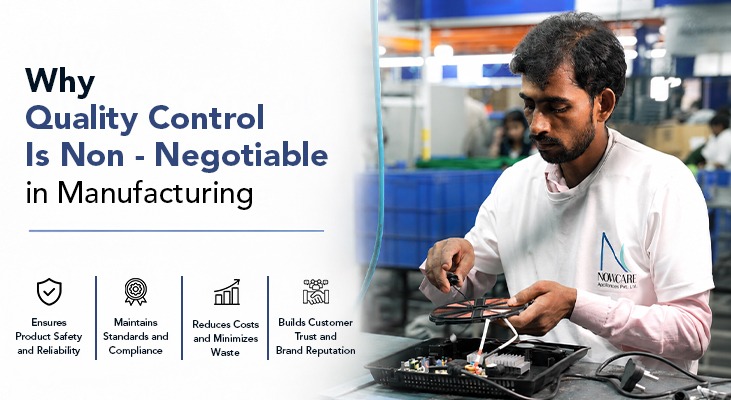
In manufacturing, reputation is built not by marketing claims but by product performance. One defective batch can damage years of brand credibility. This is why quality control is not an optional process; it is a non-negotiable foundation of sustainable manufacturing.
For appliance brands operating in competitive markets, consistent product performance directly impacts distributor trust, consumer loyalty, and long-term growth.
The Real Cost of Poor Quality
When quality control systems are weak, the consequences are immediate and measurable:
- Increased product returns
- Warranty claims and service costs
- Negative consumer reviews
- Distributor dissatisfaction
- Regulatory compliance risks
In electrical appliances, especially, quality failures can lead to safety concerns making rigorous testing and inspection essential.
What Effective Quality Control Looks Like
Strong quality control in manufacturing involves structured, multi-stage processes:
1. Incoming Raw Material Inspection
Every component, including motors, coils, plastic parts, and electrical wiring, must meet predefined technical standards before entering production.
2. In-Process Quality Checks
Inspection during assembly ensures that deviations are identified early, reducing batch-level defects.
3. Performance Testing
For appliances, this includes:
- Motor efficiency testing
- Heat resistance validation
- Airflow or power output checks
- Electrical safety verification
4. Final Inspection & Batch Testing
Before dispatch, finished goods undergo structured testing to ensure uniformity and durability.
Why Consistency Matters More Than Perfection
Manufacturing is not about producing one perfect product - it is about producing thousands of identical, reliable units. Consistency ensures:
- Stable product performance
- Lower service burden
- Strong retail confidence
- Better long-term brand positioning
Quality control systems are what make scalability possible.
The Strategic Advantage of Structured Manufacturing
Brands partnering with experienced manufacturers benefit from:
- Standardised operating procedures
- Defined testing protocols
- Traceability systems
- Continuous process improvement
As an OEM and ODM manufacturing partner, Novacare Appliances follows a multi-stage quality inspection process to ensure consistent performance across large-scale production.
Quality Control and Long-Term Growth
In competitive industries like home appliances, pricing strategies can be copied. Designs can be replicated. But reliability builds trust and trust builds repeat business.
Quality control protects:
- Brand equity
- Distributor relationships
- Market positioning
- Consumer safety
It is not a cost centre. It is a growth enabler.
Conclusion
Quality control is non-negotiable because manufacturing without discipline leads to unpredictability. And unpredictability erodes trust.
For brands focused on sustainable expansion, structured quality systems are not optional; they are the backbone of operational excellence.